Well, I suppose there are ‘Rock Stars’ and ‘Rock Stars’... so you can take your pick...
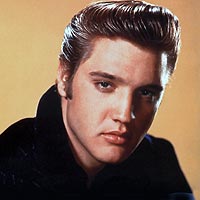
Elvis (The King)
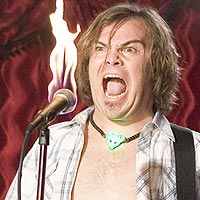
Jack Black (The Joker)
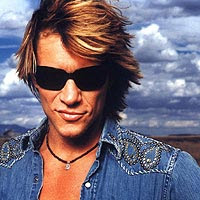
Jon Bon Jovi (The ’80s)

Phil Rudd

Well, I suppose there are ‘Rock Stars’ and ‘Rock Stars’... so you can take your pick...
 |
| All hail Googlebot! |

Good to know there are others out there that feel the same was as I do. Adobe Illustrator is just so 'early 1990s'!!

It’s not that these pages aren’t important because they are. They include key information about your company, your product or service and your brand and they allow visitors to make an enquiry. But the most important pages on your business website are your landing pages.
Landing pages (also called ‘lead pages’) are pages that are designed specifically to capture fresh leads. They are usually linked to an online campaign and include relevant keywords that make your product or service more likely to be found in online search results. Most importantly, they should guide the visitor towards a specific course of action (getting more information, downloading something or making an online purchase).
A website will often have different landing pages for particular promotions and campaigns. Often these will include different versions of the same landing page that provide statistics on which keywords and approaches rate better than others. This ‘A/B testing’ means that you can ‘tweak’ and refine your landing pages to optimise your search results. Furthermore, this can be done very quickly enabling business owners to improve landing pages that are doing well and modify or cull pages that are not performing as desired.
A landing page is not a typical website page. While it should include branding cues that link to a business, it will differ in these areas:
Well-constructed landing pages guide visitors through a process and capture key information, resulting in increased enquiries and sales leads while growing your enquiry database.
To find out more about landing pages and how they can work for your business talk to us at mhdesign.

Just a few years ago there were far fewer options for viewing a website. The normal viewing environment was a computer, and the biggest worry for a web designer was whether to make the page width 800 or 1024 pixels wide. The only other option for viewing a site was a cellphone. Sure, some sites had a ‘mobile only’ version but this was normally a vastly stripped-back version of the ‘main’ website. And the reason for this was twofold. Firstly mobile phones of the time had very limited bandwidth and processor capabilities. And secondly, the inadequate browsers and miniscule screens available meant there was a legitimate excuse for delivering a bare-bones version of the full site. Mobile browsing was not a pleasant experience. Website visitors that were using a mobile phone were ‘on the move’, accessing information out of necessity, not for entertainment. In short they only wanted the essential facts, not superfluous ‘eye candy’.
The arrival of the smartphone changed all that. Larger screen sizes and improved capability proved that these phones had online capabilities closer to mobile computing than mere cellphone browsing. Throw in the arrival of different sized tablets (with portrait or landscape viewing options) and SmartTVs and suddenly there are far more ways to view websites than ever before. And this raises a problem. It wasn’t that websites that looked fine on computer monitors didn't work on other devices. It was that websites either appeared in miniature on smartphone screens, requiring excessive ‘zooming’, ‘pinching’ and ‘scrolling’ on the user’s part or appeared at less-than-optimum resolution on the large screens of SmartTVs.
Responsive design solves these problems. A ‘responsive’ website will re-configure itself to best suit the device that it is being seen on. This might mean that site content is rearranged so that the less important page elements in the sidebar appear at the bottom of the screen. The site navigation is minimised on the screen until it is needed. Images will be optimised so they download efficiently and appear at best quality on a wide range of screen sizes.
As far as site management is concerned, properly-conceived responsive design has a huge advantage over preparing different versions of a website for different media. As there is only one copy of the site to maintain, there is no need to worry about keeping different versions of the site ‘in synch’.
Finally, a responsive website is not an ‘app’. Apps are special tools or ‘applications’ designed to perform a particular function. It might be to play a game, or to access secure online banking services. A responsive website is a complete version of the website, containing all the content no matter what environment it is viewed on.
To find out about Responsive Design and what it can do for your business, talk to Mike and the team at mhdesign.co.nz
The other day I stumbled across this article from 1994. Originally published by an Auckland business (Hippo Marketing Limited) long before everybody discovered the Internet and the World Wide Web, the thoughts on the Creative Industries contained therein are as true now as ever. Kim (Hippo) Brady, thank you for these words of wisdom!

Ahh, good old Kiwi ingenuity! That great Do-it-Yourself mentality for which we are renowned. lt’s a truly wonderful thing – or is it?
In today’s competitive economy, with the pressure on everyone to run an increasingly ‘tighter ship’, many organisations have dispensed with their advertising agency or in-house marketing professionals, seeing them as ‘unnecessary expenditure’. After all, newspapers will design an ad for free, radio stations will write a commercial as part of the overall schedule cost and someone in the office could run up a brochure on their PC with the aid of a photocopier and a bottle of twink. So why pay good money to an outside specialist?
The answer lies in that key word – “Specialist”.
Just as your company employs each worker in his or her most productive capacity, your promotional endeavours be approached with an eye for maximum return. Every aspect of a promotion including research, branding, packaging, quality control and final presentation is designed to showcase your saleable commodity to its fullest advantage and any marketing activity should work towards this.
It’s true that, while most media will offer to produce your ad for free, they’re also doing the same for many other companies in any given week, with the result being your ad will look and sound just like many others. You’d hardly instruct your sales team to tell potential customers your product or service is ‘average’, its price ‘about the same as usual’ and its benefits ‘negligible’. Yet poorly produced advertising and promotional literature can communicate all this at a single glance. Or worse, have no impact at all.
There’s a simple truth about advertising, marketing, promotions and PR. They’re time and labour intensive, and when not done right will reflect poorly on the image of your company and the integrity of products or services. The simplest advertising or marketing job entails numerous steps, each involving various individuals who are specialists in their field.
Fortunately, recent years have seen an increase in the number of these talented professionals working in small collectives or a freelance capacity. People like photographers, designers, copywriters, graphic artists and illustrators and related professionals.
If you were to tap into this pool of talent you’d find that you don’t need to spend big bucks to have a job done right. The money simply needs to be spent wisely, in the right areas, allowing you and your staff to get on with what you do best.

1987: I discovered the MacPlus, PageMaker 1.0 and a 300dpi LaserWriter. I grappled with on-screen type peering through a tiny greyscale monitor and thought: "No way are you getting me up in one of these things ever again". My employer told me that very soon one of these computers would be sitting on everyone's desk. Ridiculous!
1989: Discovered the Mac II which actually included a hard drive! This meant I didn't need to load system each time I turned the machine on. PageMaker 3, Freehand 2 and my favourite fonts were already loaded and ready to go. I didn't need to manually download them to printer using Font/DA Mover. Fantastic!
1992: Developed my skills. Moved from a small design company into a corporate environment. The IT guy there (Jack the Mac) describes me as a ‘Power User’. Impressive!
1994: Discovered Photoshop. Realised it was very powerful and could do a lot of stuff, but not on a Mac II CI running a 030 processor. Upgraded to a Quadra (040) with 1GB hard drive and 12MB of RAM. Now we’re talking!
1996: Discovered the Internet and wondered what it was there for. Used it to send email. Discovered TAB notation for the guitar. Still can’t read TAB -- I prefer to play my 12-string by ear, as I always have.
1999: Thought I’d better come to grips with this internet thing. Lots of websites are being designed by geeks with computer degrees -- and it shows! The sites are semantically perfect but they all look the same. New business opportunity for freelance designer. Did a course in web design (passing convincingly)!
2005: Adobe brought Macromedia. They stopped supporting Freehand MX, insisting that Mac Freehand users switch to the wonderful world of Illustrator. BOO! (I resisted for years).
2009: Discovered the SilverStripe Content Management System. Now I can set up a templated 'theme' for my client's website and they can add and edit pages as they wish. The CMS is much simpler and easier to integrate than any other CMS I've encountered. And for my clients, updating content and adding pages is as easy as using a word processor. Great!
2012: Heard about the new world of 'Responsive Design'. Still 'responding' to this one but learning more every day!
This has got to be one of the most poignant renditions of David Bowie’s ‘Space Oddity’ ever created. Thank you Commander Chris ‘Major Tom’ Hadfield. Mission completed!
“Remembering that I’ll be dead soon is the most important tool I've ever encountered to help me make the big choices in life. Because almost everything – all external expectations, all pride, all fear of embarrassment or failure – these things just fall away in the face of death, leaving only what is truly important.
“Remembering that you are going to die is the best way I know to avoid the trap of thinking you have something to lose. You are already naked. There is no reason not to follow your heart.”
Steve Jobs 1955 - 2011


 I’m more than slightly disturbed by the amount of ‘bounced’ emails that are returning back to my ‘generic’ email address.


I have a bone to pick with you, Jim.
This was supposed to be a fantastic Labour Weekend. All last week you were assuring us that, unlike Labour weekends of years past, this one was really going to be one out of the box. A massive high-pressure system was headed our way across the Tasman, and given the favourable conditions it was going to anchor over the whole of New Zealand for the whole three day weekend. Bear in mind that due to the vaguaries of the New Zealand Holiday Act three day weekends have been in short supply this year and the last one was in June. So we’re taking a long time between drinks here.
Yes, we know that it’s difficult to get accurate weather forecasts for New Zealand. As NIWA has explained, we’re a long, thin landmass nestled in the ’Roaring 40s’ and conditions can be very unpredictable. The Finn Brothers even sang that we really can have ‘four seasons in one day’. That’s why the guys at the Met Office get you to throw in a few caveats with every forecast, just to cover yourselves. You know, like “Mainly fine apart from occasional showers”, ”Settled conditions, becoming changeable in the afternoon”, that sort of thing. But Jim, you really did it this time. All last week you told us it was going to be fantabulous, amazing, incredible weather over most of the country all weekend. And all right, over much of the country you got it right. But guess where you didn’t?
Sure, as the old saying goes, “you can’t beat Wellington on a good day”. That’s absolutely true. But Wellington didn't even get ONE good day on this Labour-Weekend-to-beat-all-Labour-Weekends. Saturday was overcast and drab. It was worse than that on Sunday, Jim. And it didn't get any better on Monday. Maybe the sun was shining in other parts of the country but it sure as hell wasn’t shining in one part of the country for the whole three days. In fact if only brightened up this afternoon. And that fact even made the Six O’Clock News Hour!
We’re understanding folk here in Wellington, Jim. We understand that some factors are simply beyond your control and you can’t always get it right. We understand that you’re a ’Naki boy at heart who has been forced to work in the Big Smoke up north. Do yourself a favour, next time you think you see a fantabulous long weekend coming up, play it safe and leave yourself a little wriggle room. Who knows, we may all be pleasantly surprised!
I see the Local Body Elections are drawing ever-closer upon us and we should all do the democratic thing and cast our votes. The thing is I’m having a problem telling the candidates apart. It says a lot for the calibre of those misguided souls that feel a calling to put themselves forward for Local Government when you can’t tell one from the other.
Right now the incumbent Mayor of Lower Hutt is telling us that he stands for Lower Rates and Better Services. His opposing candidate is saying exactly the same thing. I don’t get it...
Consider the proposition itself. “Lower Rates and Better Services”. Now that sounds like an inherent contradiction in terms to me. How are you expected to improve services when you're bringing in the same amount of money through rates? The obvious solution is to charge more for the services. So your rates won’t go up as much as they might have otherwise but you'll still end up paying more.
Years ago I lived in West Auckland. At the time the incumbent Mayor had just taken delivery of a Daimler Limousine for civic duties. A certain concrete contractor and ex-student radical, name of Shadbolt, pointed out that this extravagance was a waste of ratepayer money with no tangible benefit to the ratepayer. He then pointed out that the Daimler didn't even have a tow-bar. If he became Mayor he wouldn’t be able to tow his concrete mixer! Well, the rest is history. Tim ‘I Don't Care Where As Long as I’m Mayor’ Shadbolt went on to become Mayor of Waitakere City, the Daimler got a tow-bar and Tim towed his trusty (or was that rusty) concrete mixer in the Henderson Christmas Parade. He then went on to lose Waitakere’s Mayoral chains while on a ‘speaking engagement’ at Auckland’s Gluepot Pub. Consequently Tim is now Mayor of Invercargill. Still, it was fun while it lasted.
Most local politicians are not nearly as colourful as young Tim. The local candidates for Mayor are neither Red or Blue, but more consistently a uniform shade of uninspiring Grey. The candidates in the race to become Auckland’s first 'Super Mayor' are similarly indistinguishable. Manukau Mayor Len Brown cried when he had to cut up his official credit card after ‘inappropriate’ use. Auckland City Mayor John ‘Banksy’ Banks similarly cried at a recent court investigation over the death of an acquaintance of his 18 year old son (which wouldn’t have hurt his prospects of re-election at all). From here the future of the Super City doesn’t look too healthy.
The only local body candidate to stand out in any way is Mayor Bob Parker of Christchurch. Bob’s fortunes have changed since the Christchurch earthquake last month and the subsequent aftermath. Bob has been the right man, in the right place, at the right time and has handled the whole business in a very credible manner. His rival, ageing political hack Jim Anderton can’t rival this performance. I imagine Jim will stick to Central Government and the public trough for another parliamentary term.
“Then again, our council is strictly non-political... They’re all conservative.” (Michael Flanders)

“So bye bye, Miss American Pie. Drove my Chevy to the levee but the levee was dry.
Them good ol’ boys was drinking whisky and rye, saying ‘this will be the day that I die...’ ”
Not so long ago, after a number of years I made contact with my old mate, Mark. I had done a drawing of Mark’s 1948 Chev Thriftmaster pick up truck a couple of years ago. In the mid '80s I'd taken some 35mm photos of ‘Baby Blue’ with the idea of doing an airbrushed illustration.
How times have changed! It wasn’t until 2008 that I got around to doing the illustration. Computers had replaced drawing boards and the global economy was going down the toilet. I found myself with time on my hands so I dragged out the old black and white 8x10" print I had made years earlier in the Auckland Star darkrooms and set to work.
This was the very first time I had attempted this kind of work on a computer. The idea was to create a rendered illustration of something unique – not just any 1948 Chev Thriftmaster but the particular truck that Mark had owned years earlier. I began by blocking in the blue painted surfaces and used Photoshop’s dodge and burn tools to render highlights and shadows. The Chev also bristled with chromework and working out how to render the polished hubcaps and model the fluted grille surfaces was a real challenge. The final touches were the small details, the 1940’s Chevrolet badging, the polished bolt caps on the 1/8" steel bumpers, the Chevrolet ‘bowtie’ emblems, double rear leaf springs and the 1980s vintage registration plates. IMHO this is what ‘makes' the illustration.’
If anybody wants a blow-by-blow tutorial drop a comment in the blog and I'll see what I can do...
Mark’s first car was a 1970’s Mk 3 ‘Coke Bottle’ Ford Cortina that his old man had picked out for him. It had been owned by a mechanic, had been well maintained, had a tidy body and was in good running order. At the business end it had a 1.6 litre four-cylinder crossflow engine lugging a fairly substantial mid-sized body and Mark hated it. He often said his old man had brought it to try and kill him. In fact he must have always been a Chev man because when he sold it a few years later this was the vehicle that replaced it!
‘Baby Blue’ was huge. Traditionally pre mid-1950’s Chevs had inline six-cylinder engines and ‘Baby Blue’ was no exception. The original sidevalve ‘Stovebolt Six’ had been replaced with a more modern ‘Blue Flame’ unit mated to the original three-speed gearbox. Acceleration was hardly neck-breaking but once wound up the truck would cruise comfortably at nearly 60 miles per hour (100kmh), it’s town-and-country rear tyres making a distinctive ‘frrrrrp’ sound as it whizzed along the roadway. Fuel consumption was the stuff of legend.
Mark was a collector. From his childhood he had made collections of all manner of articles. I met him during my third-form year at college and he invited me home after school shortly afterwards. He then showed me his collection of Malaysian ‘Kris’ daggers, a couple of machetes, some WWII bayonets and a ‘Kukri’ – the weapon of choice of the Ghurka Regiment. Subsequently he acquired a veteran Excelsior motorcycle, a King Nuetrodyne wireless radio set, a vintage Austin Seven and all manner of other stuff. If you needed to get hold of anything in the second hand/‘antique’ line or any old machinery Mark always ‘knew where one was’. With a 1/2 ton payload ‘Baby Blue’ was the ideal way to move his collections around. Most importantly it also meant that his Alsatian, Sheik, could ride on the huge tray, thus eliminating the problem of dog hair on any upholstery.
Like all older vehicles, ‘Baby Blue’ had it’s quirks. After years of wear the ignition switch could be turned on without the benefit of a key. It had a floor-mounted starter switch and no synchro on first gear. It had a vinyl-upholstered bench seat and absolutely no seatbelts. A collection of air-horns linked to an asthmatic compressor lurked behind the grille. The windscreen wipers were operated by the vacuum in the induction manifold, meaning that they would stop altogether when going uphill on full throttle and nearly fly off the screen going downhill on over-run. On one memorable trip from New Plymouth to Auckland the industrial-strength fanbelt broke and the engine overheated sending steam pouring up through the floorboards into the cab. Fortunately the Blue Flame suffered no permanent damage but a blown head gasket had to be replaced!
In fact that was our last trip in ‘Baby Blue’. Mark was taking her up to Auckland to sell her. He needed the money to contribute towards his share of the house that he and his girlfriend were buying.
I sent him a print of ‘Baby Blue’ for his birthday this year. Thanks for the memories...
“I was a lonely teenage bronc'n'buck with a pink carnation and a pick-up truck...”
(‘American Pie’, Don McLean)
I don’t think Iceland was even in the World Cup (were they?) but this is an unbelievable celebration of a sporting triumph though I don’t think it was totally spontaneous – I have a sneaking suspicion that they might have been rehearsing for just such an occasion...


